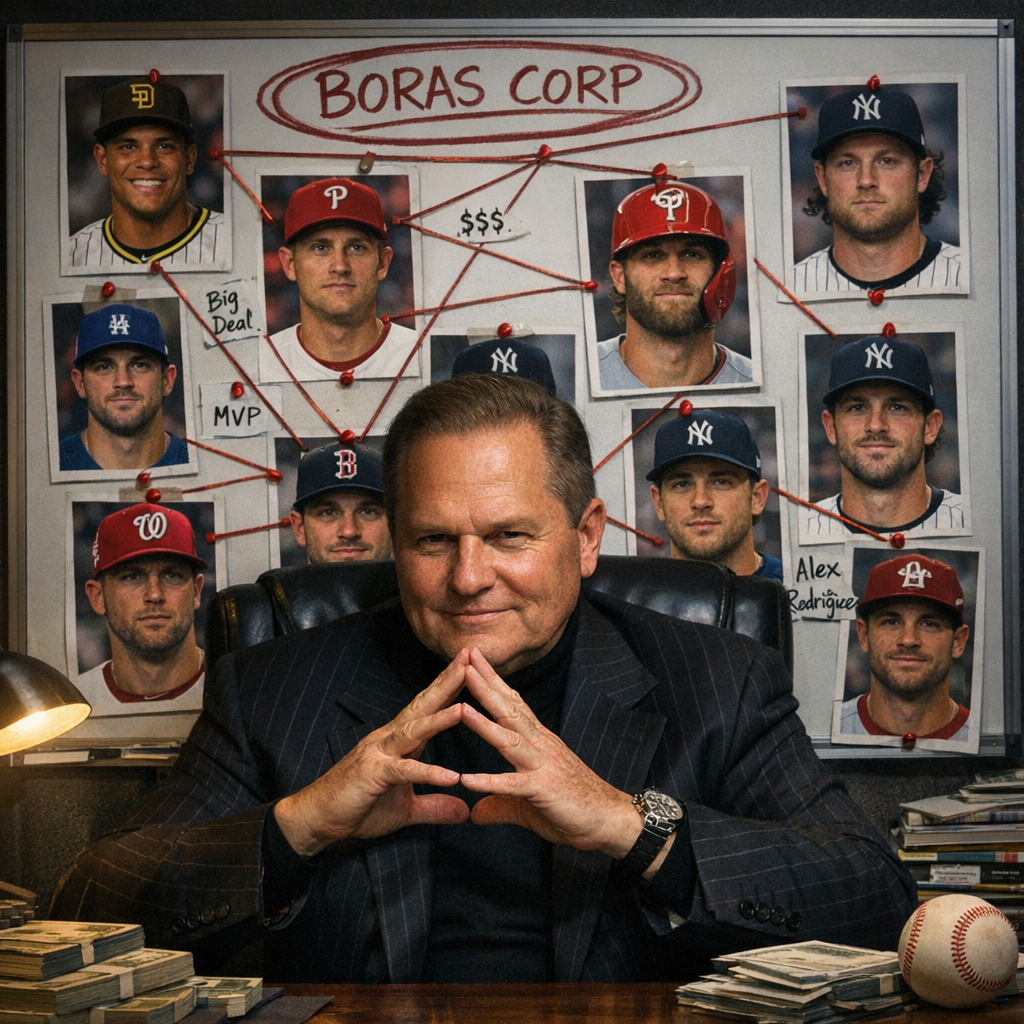
In modern baseball, star hunting has a toll booth—and Scott Boras runs it. For three decades, the Boras Corporation has turned free agency into a yield farm for generational contracts, record AAVs, and leverage that often outmuscles even the richest clubs. The result: if you’re an owner or a GM trying to add premium talent, there’s a good chance Boras gets his slice.
The Playbook: Maximize the Marketplace, Then Redefine It
Boras’ core strategy isn’t complicated, just relentless: widen the bidding pool, resist early discounts, and weaponize precedent. Each new landmark deal becomes the floor for the next superstar. Think mega-pacts for frontline pitchers and middle-of-the-order anchors—agreements that set the tone for the entire market and ripple for years.
He’s also mastered the calendar. Slow-playing winters, floating ‘mystery teams,’ and controlling the narrative keeps pressure on clubs that feel one piece away. When scarcity bites, numbers climb.
“His Slice”: How MLB Agent Fees Actually Work
MLB doesn’t impose a hard cap on agent commissions. Fees are negotiated between player and agent (subject to MLBPA guidelines that protect the player’s minimum compensation). In practice, industry norms hover around roughly 4–5% on player contracts. On billion-dollar portfolios, even single-digit percentages compound into nine-figure career earnings.
That’s the Boras business model in a sentence: scale, patience, and leverage—applied deal after deal.
How Owners and Clubs Really Feel
Two truths coexist: respect and resentment. Front offices privately concede Boras is the best in the business at extracting full value—he’s meticulously prepared and ruthless in comps. At the same time, some owners see his process as an annual hostage situation: if you need the star, you pay the toll. Complaints aside, those same clubs end up at the table whenever a championship window opens.
2025–26 Offseason: Who’s at Boras’ Table (and why it proves the slice thesis)
• Cody Bellinger (OF/1B) — Still unsigned as his camp works the long-term lane. He’s a headline outfield bat and a classic case study in Boras’ slow-play approach: build demand, let scarcity set the price, and aim for both term and AAV that fit a star profile.
• Alex Bregman (3B) — A high-end third baseman back on the market seeking a multi-year anchor deal. He’s precisely the kind of middle-of-the-order/left-side profile that draws big-market attention and invites precedent-setting comps.
• Pete Alonso (1B) — Signed: 5 years, $155 million with the Baltimore Orioles. A middle-order masher landing $31M AAV with a contender is textbook Boras outcome: monetize premium power at scale and do it in a market hungry for impact bats.
In sum, the 2025–26 winter amplifies the thesis. Clubs that want instant offense or cornerstone bats find themselves navigating the same toll road—Boras in the booth, precedent on the placard.
What Boras Changed About Free Agency
1) Pace & patience: He normalized waiting out the market to surpass ‘comfortable’ early offers. 2) Precedent as weapon: Every record deal becomes a ladder rung for the next client. 3) Narrative control: Strategic leaks, tailored comps, and media moments turn public perception into leverage.
Is Scott Boras the Greatest Sports Agent Ever?
Across all sports, there are titans—Rich Paul in the NBA, Drew Rosenhaus in the NFL, Jorge Mendes in world football. But if the criteria are total guaranteed money negotiated and long-term market-shaping power, Boras is the clubhouse leader. Multiple all-time record deals, decades atop agent rankings, and a portfolio measured in billions paint a singular picture.
Verdict: In baseball, he’s the clear No. 1. In the broader sports world, it’s hard to find a stronger case for “greatest of all time.” If you want to add elite talent, history says Boras gets his slice—and his players get their bag.